Shared component library, frontend conventions, and product workflows across four product surfaces.
AlwaysGeeky Games
Shared Design System & Frontend Standards
Four product surfaces shared one React and TypeScript component library. I built and owned it, and established the conventions that decided how teams were expected to build against it: component APIs, accessibility defaults, TypeScript rules, and what a review was supposed to catch.
- React
- Next.js
- TypeScript
- Storybook
- GraphQL

Context
The surfaces included a marketplace, authentication, product, and account experiences, all in Next.js on top of the shared library, documented in Storybook and integrated over GraphQL. Alongside the product work, we ran an AI-assisted development workflow using Cursor with MCP tooling, so the same lint, type, and test signals engineers saw in CI were available in the editor.
Diagram
One library under four product surfaces
Select a layer to see what it owns.
Marketplace, authentication, product, and account experiences, integrated over GraphQL.
Components with explicit states and escape hatches, used across every surface.
Where each component's contract and the states it is responsible for are written down.
Component API shape, accessibility defaults, TypeScript rules, and what reviewers push back on.
Hold the library and the product surfaces to the same baseline.
Problem
Marketplace and account flows drift into one-off implementations the moment speed beats shared contracts. Four surfaces multiply that: the same empty state gets invented four times, accessibility gets handled well in one and forgotten in the others, and nobody notices until the library and the products disagree.
Diagram
Per-surface one-offs vs a shared contract
One-offs per surface
- The same empty state gets invented four times
- Accessibility handled well in one surface and forgotten in the others
- The library and the products disagree before anyone notices
- Conventions live only in reviewers' heads
Shared library with gates
- Loading, empty, and error states defined once and reused
- Accessibility defaults built into shared components
- Storybook documents each component's states and API
- CI gates enforce the baseline instead of reviewer memory
My role
- Owned the React and TypeScript component library used across all four surfaces.
- Established the frontend conventions the surfaces were built to: component API shape, accessibility expectations, TypeScript rules, and what reviewers were expected to push back on.
- Evolved the Storybook documentation so components were discoverable enough that reuse was the easier path.
- Wrote the design docs for library and convention changes, and drove their adoption across the teams building the four surfaces.
- Mentored engineers on component API design, accessibility, and TypeScript patterns through pairing and code review.
- Shipped marketplace, authentication, product, and account workflows with consistent loading, empty, and error handling.
- Worked on the Cursor and MCP setup so editor feedback lined up with the checks CI already ran.
What I built
- Shared React and TypeScript components used across the marketplace and account surfaces.
- Storybook documentation covering component usage and the states each one is responsible for.
- Workflow UI for catalog browsing, login, and account-access states.
- CI quality gates that held the library and the product surfaces to the same baseline.
Technical decisions
Decision
Treat component APIs as the contract, and Storybook as where that contract is written down, rather than as documentation produced after the fact.
Why
A component used on four surfaces is an interface other engineers depend on. If its states and escape hatches aren't explicit, each surface fills the gaps differently.
Trade-off
Codifying a pattern is slower than writing the screen in front of you, and every component gains maintenance weight.
Result
The library stayed close to the surfaces it was meant to serve instead of becoming a parallel set of components nobody reached for.
Decision
Put the design-system baseline behind CI gates instead of relying on reviewers to remember it.
Why
Conventions that only live in people's heads decay as soon as the team is busy, and review attention is the scarcest thing on a small frontend team.
Trade-off
Gates add friction on individual screens, and a gate that fires too often gets routed around.
Result
Standards work stayed enforceable rather than aspirational, and review time went to design decisions instead of catching lint-level drift.
Decision
Wire the AI-assisted workflow through MCP tooling that runs the same lint, type, and test commands as CI.
Why
Editor-level AI assistance is only useful if its feedback matches what will actually block the pull request.
Trade-off
Maintaining the tooling is real work, and it only pays off if the underlying scripts stay the single source of truth.
Result
Assisted development stayed anchored to the project's real quality signals instead of to a model's guess about them.
Diagram
The same checks from editor to merge
Select a step to see what happens there.
The underlying scripts stay the single source of truth, so editor feedback and CI cannot drift apart.
Step 1 of 4
Build in editor
Engineers work against the shared library with Cursor and MCP tooling.
UX and detail decisions
- Kept loading, empty, and error states consistent across product surfaces instead of letting each workflow invent its own patterns.
- Used accessibility improvements such as semantic structure, keyboard support, and clearer state messaging where the product surfaces required it.
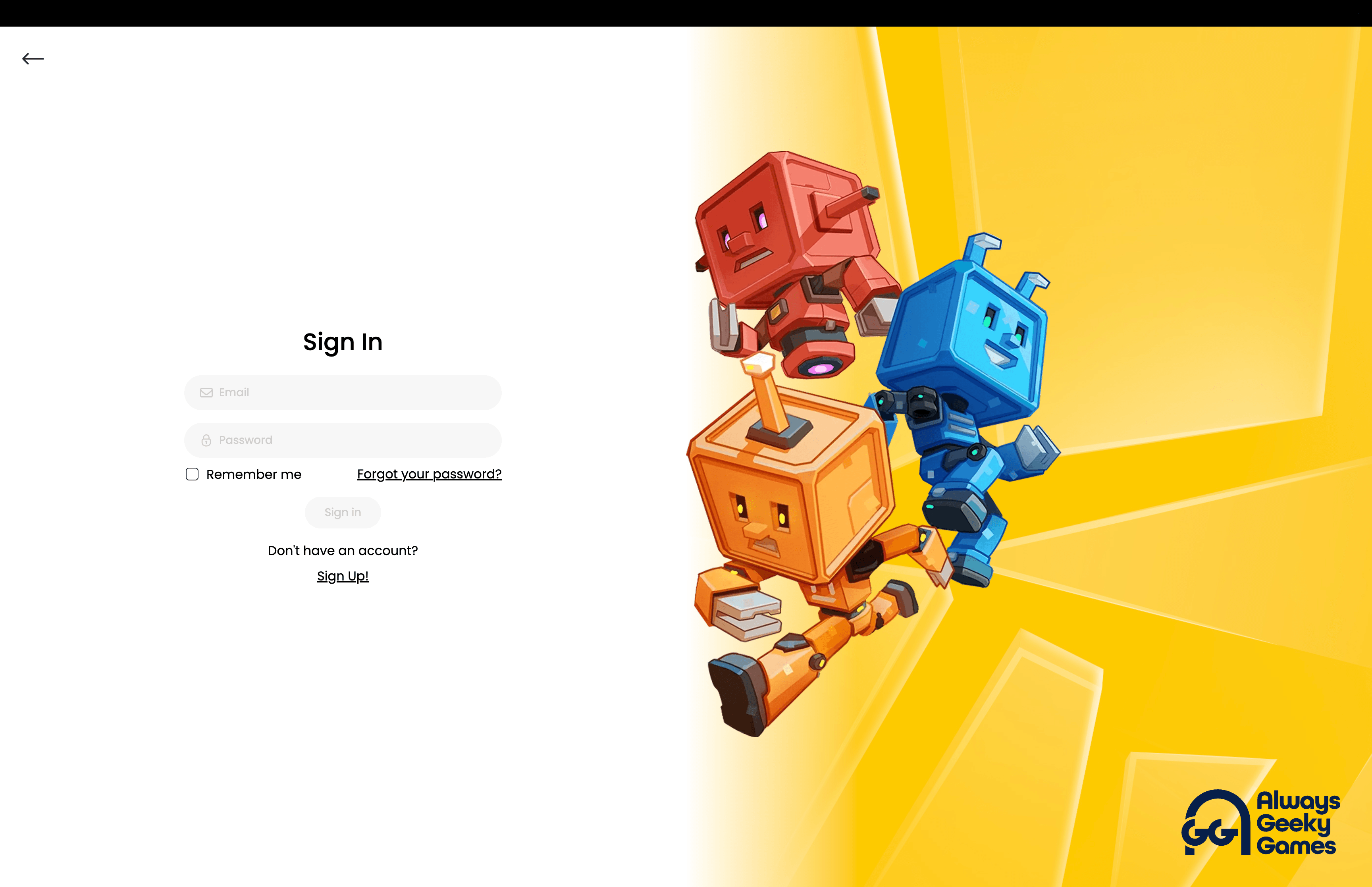
- Treated authentication and recovery UI as part of the same system as the main marketplace experience.
Interface evidence
Outcome
- A component baseline four product surfaces were built on, with the conventions and gates that kept them aligned.
- Closer agreement between Storybook documentation, shipped UI, and what CI actually enforced.
- Better accessibility, responsive behaviour, API integration, and testing standards across the surfaces, plus an AI-assisted workflow tied to the project's real checks.
What I would improve
- Expand product-level regression coverage around key marketplace paths so system-level changes are easier to validate.
- Document more workflow-specific usage guidance inside Storybook as the shared system grows.